
Your garage door is more than an entry point to your home. It protects your vehicles, improves home security, and helps maintain indoor comfort. But like any mechanical system, it can develop problems over time, especially with frequent use and changing weather conditions.
For Chicago homeowners, garage door problems can become more noticeable during winter. Freezing temperatures, snow, moisture, and seasonal temperature changes can affect springs, rollers, tracks, weather seals, and automatic openers. A small issue that seems harmless today could eventually leave your garage door stuck or unsafe to operate.
The good news is that most garage door problems show warning signs before a complete breakdown. Recognizing these signs early can help you avoid expensive repairs and protect your family.
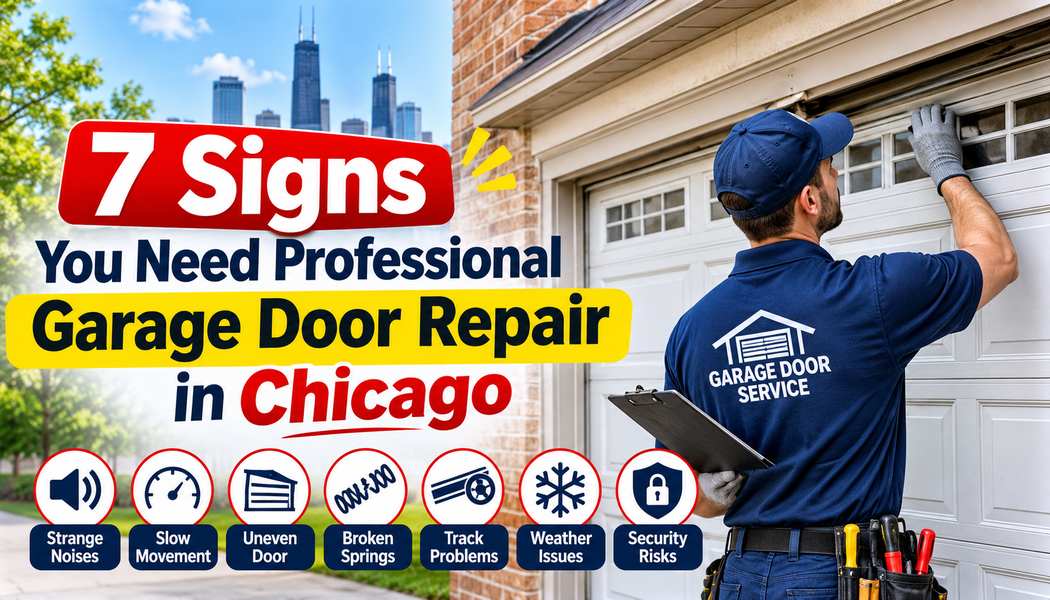
Here are seven signs that indicate you may need professional garage door repair in Chicago.
1. Your Garage Door Makes Unusual Noises
A properly functioning garage door should move smoothly without excessive noise. Although some operational sounds are normal, sudden grinding, squeaking, rattling, or banging noises may indicate a mechanical problem.
Different sounds can point to different issues.
- Grinding: Often indicates worn opener gears, damaged rollers, or friction between metal components.
- Squeaking: May result from worn hinges, rollers, or insufficient lubrication.
- Banging: Can indicate a broken spring, loose hardware, or another serious mechanical issue.
- Rattling: Often points to loose bolts, brackets, hinges, or other hardware.
- Scraping: May suggest misaligned tracks or rollers rubbing against metal surfaces.
Ignoring these sounds can allow a minor mechanical issue to develop into a more expensive repair.
For example, worn rollers can create additional friction and put unnecessary strain on the garage door opener. Replacing damaged components early may help prevent further damage.
What should you do?
Pay attention to when the noise occurs and whether it becomes louder over time. Avoid attempting to adjust springs or other high-tension components yourself. Have a professional technician inspect the door and identify the source of the noise.
2. Your Garage Door Opens or Closes Slowly
Your garage door should respond promptly when you press the remote or wall-mounted control. If it takes several seconds to start moving, struggles during operation, or moves much more slowly than usual, something may be wrong.
Slow operation can have several causes, including:
- Worn-out garage door opener components.
- Damaged or aging rollers.
- Poorly lubricated moving parts.
- Spring tension problems.
- Track misalignment.
- Electrical or opener-related issues.
One important thing to understand is that your garage door opener is designed to move a properly balanced door. If the door becomes difficult to lift because of a spring or mechanical problem, the opener may experience additional strain.
Continuing to operate the system under these conditions can eventually damage the opener motor.
When should you call a professional?
If the door consistently moves slowly despite checking for obvious obstructions, schedule a professional inspection. A technician can determine whether the issue involves the opener, springs, rollers, or another component.
Early diagnosis can help prevent a complete opener failure and reduce the risk of being unable to access your garage.
3. Your Garage Door Looks Uneven or Starts Sagging
A garage door should sit evenly within its frame when closed. If one side appears lower than the other, the panels look uneven, or the door begins sagging, it could indicate a problem with the lifting system.
Common causes include:
- Broken or weakened garage door springs.
- Frayed or damaged lifting cables.
- Worn rollers.
- Misaligned tracks.
- Structural damage to door panels.
A garage door relies on a balanced spring system to support its weight during opening and closing. When that balance changes, the door may become difficult to operate or move unevenly.
This problem should not be ignored. An unbalanced door places additional stress on the opener, tracks, cables, and other hardware.
Why professional inspection matters
A technician can inspect the springs, cables, rollers, and tracks to identify the underlying cause. Depending on the damage, the solution may involve spring replacement, cable repair, or track adjustment.
Never attempt to lift or force a visibly uneven garage door. A damaged lifting system can cause the heavy door to drop unexpectedly.
4. Your Garage Door Gets Stuck or Refuses to Close Completely
Few things are more frustrating than a garage door that refuses to close, especially when you need to leave for work or secure your home at night.
If your door stops halfway, reverses unexpectedly, or refuses to move at all, there may be an issue with its mechanical or electrical system.
Some common causes include:
- Objects blocking the garage door tracks.
- Dirty or misaligned safety sensors.
- Damaged springs or cables.
- Faulty opener components.
- Incorrect travel-limit settings.
- Bent or damaged tracks.
Before calling a technician, you can perform a few basic checks.
First, make sure there are no objects blocking the door’s path. Next, inspect the photo-eye sensors near the bottom of the garage door opening. Dust, debris, or accidental movement can interfere with their operation.
If cleaning the sensor lenses and removing visible obstructions do not solve the problem, professional troubleshooting may be necessary.
Why this matters for Chicago homeowners
A garage door that cannot close properly creates a security concern. It may also expose your garage to cold air, moisture, and unwanted access.
If the door remains stuck or operates unpredictably, avoid repeatedly pressing the opener button. Continuous operation can make an existing mechanical problem worse.
5. Your Garage Door Moves Unevenly or Comes Off Its Tracks
A garage door should travel smoothly along its tracks. If it shakes, jerks, tilts, or moves from side to side, it may have a problem with its rollers, tracks, cables, or supporting hardware.
In more serious situations, the rollers may come out of the tracks entirely.
Several factors can contribute to this problem:
- Bent or misaligned tracks.
- Broken or worn rollers.
- Loose mounting brackets.
- Damaged lifting cables.
- Accidental impact from a vehicle.
- Worn mechanical components.
An off-track garage door is particularly dangerous because the door may become unstable and fall without warning.
What should you do if your door comes off its tracks?
Stop operating the garage door immediately. Keep children, pets, and vehicles away from the affected area.
Do not attempt to push the rollers back into place or operate the automatic opener. A professional technician needs to inspect the door, identify the cause, and safely restore the track alignment.
Professional garage door track repair can also help prevent the same problem from happening again.
6. You Notice Broken Springs, Frayed Cables, or Visible Damage
Some garage door problems are easy to identify through a simple visual inspection.
For example, you may notice a visible gap in a torsion spring, a hanging cable, damaged panels, or rust around metal components.
These problems can affect the door’s ability to support its weight and operate safely.
Watch for the following warning signs:
- A visible gap in the torsion spring above the garage door.
- Frayed, loose, or hanging cables.
- Cracked or bent door panels.
- Rusted hinges, brackets, or other hardware.
- Damaged rollers or mounting components.
- A door that suddenly feels unusually heavy.
Broken garage door springs deserve particular attention. Springs carry significant tension and help counterbalance the weight of the door. When one breaks, the door may become extremely difficult to lift or may no longer operate safely.
Similarly, damaged cables can cause the door to become uneven or lose proper support.
Why you should not attempt DIY spring or cable repair
Garage door springs and cables are under considerable tension. Incorrect handling can cause serious injuries or additional property damage.
If you notice a broken spring or damaged cable, stop using the door and contact a trained garage door technician. Professional inspection and replacement are the safest ways to restore proper operation.
7. Your Garage Door Lets in Cold Air, Water, or Outside Debris
Your garage door plays an important role in protecting your garage from outside weather conditions.
If you notice cold air entering around the edges, water collecting near the bottom, or daylight showing through gaps when the door is closed, your weatherstripping or door alignment may need attention.
This issue is especially important in Chicago, where winter temperatures, snow, ice, and moisture can put additional pressure on garage door seals.
Common causes include:
- Cracked or worn bottom weather seals.
- Damaged side and top weatherstripping.
- Bent or poorly aligned door panels.
- Gaps caused by an uneven garage floor or door closure.
- Insufficient insulation.
A damaged bottom seal can allow snow, rainwater, dirt, and cold air to enter your garage. If your garage is attached to your home, poor sealing and insulation may also affect the comfort of nearby living spaces.
How can you address the problem?
Start by visually inspecting the rubber seal along the bottom of the door and the weatherstripping around its frame.
If the seals are cracked, compressed, or missing sections, replacement may solve the problem. However, if the gaps result from damaged panels or poor door alignment, additional repairs may be necessary.
A professional inspection can help determine whether you need weather seal replacement, panel repair, insulation improvements, or a complete door replacement.
Why Chicago Weather Can Make Garage Door Problems Worse
Chicago’s changing weather conditions can put additional stress on garage door systems throughout the year.
Understanding these seasonal challenges can help homeowners recognize problems before they become serious.
Winter: Freezing temperatures and ice
Cold temperatures can affect moving components and make existing mechanical problems more noticeable. Ice may also cause the bottom weather seal to freeze against the garage floor.
Never force a frozen garage door open. Doing so can damage the seal, panels, or opener.
Spring: Moisture and changing temperatures
Rain and moisture can contribute to corrosion on metal components, particularly when protective coatings are damaged. Check weatherstripping and inspect visible hardware for signs of deterioration.
Summer: Heat and humidity
High humidity and temperature changes can affect certain door materials, particularly wood. Regular inspections can help identify warping, damaged seals, and other problems.
Fall: Preparing for colder weather
Leaves, dirt, and debris can collect around tracks and sensor areas. Cleaning visible debris and checking the door’s operation can help prepare the system for winter.
Addressing seasonal wear early can reduce unexpected breakdowns and help extend the working life of your garage door.
Should You Repair or Replace Your Garage Door?
Not every garage door problem requires a complete replacement. In many cases, repairing a damaged component is a more practical and affordable solution.
However, there are situations where replacing the entire door may make more sense.
| Situation | Recommended Solution |
|---|---|
| Broken garage door spring | Spring replacement |
| Damaged lifting cable | Cable repair or replacement |
| Worn-out rollers | Roller replacement |
| Misaligned tracks | Track repair or adjustment |
| Faulty garage door opener | Opener repair or replacement |
| Cracked weather seal | Weatherstripping replacement |
| Minor panel damage | Panel repair or replacement |
| Extensive structural damage | Consider full door replacement |
| Repeated major mechanical failures | Compare repair and replacement costs |
When making this decision, consider the age of your door, the extent of the damage, repair costs, insulation performance, and overall condition.
A professional technician can inspect the entire system and explain whether repairing the existing door or installing a new one is the better long-term option.
When Should You Call a Professional Garage Door Repair Technician?
Some basic maintenance tasks, such as cleaning sensor lenses or removing debris from visible track areas, can be handled by homeowners.
However, problems involving springs, cables, track alignment, structural damage, or electrical components require professional attention.
Contact a garage door technician if you notice:
- A broken or visibly damaged spring.
- A frayed or disconnected lifting cable.
- A door that has come off its tracks.
- A door that drops, slams, or moves unevenly.
- An opener that struggles to lift the door.
- A garage door that repeatedly reverses without an obvious obstruction.
- Significant damage to panels or supporting hardware.
If your garage door is unstable, stop using it until it has been inspected. Keep people and vehicles away from the affected area.
A qualified technician can diagnose the problem, explain the available repair options, and test the system after completing the work.
Why Choose Professional Garage Door Repair in Chicago?
Choosing an experienced local garage door company can make a difference when your door stops working or develops a safety issue.
A professional service provider should offer more than a quick fix. The technician should identify the underlying problem, explain the recommended repair, and check that the entire system operates properly.
Before hiring a garage door repair company, consider these factors:
- Experience: Look for technicians familiar with residential and commercial garage door systems.
- Transparent pricing: Request an estimate before approving the repair.
- Emergency availability: Ask whether the company handles urgent garage door problems.
- Quality replacement parts: Make sure replacement components are suitable for your door.
- Safety testing: The technician should test the door’s movement and safety features after completing the repair.
- Workmanship warranty: Ask what warranty coverage is available for parts and labor.
Working with a reliable local company can help you avoid temporary fixes and recurring problems.
Get Professional Garage Door Repair in Chicago
Your garage door should operate smoothly, close securely, and protect your home throughout the year. Ignoring unusual noises, slow movement, damaged springs, or uneven operation can lead to more serious problems.
The best approach is to recognize warning signs early and arrange professional service before a minor issue becomes a major breakdown.
If your garage door is making unusual noises, refusing to close, moving unevenly, or showing visible damage, Magic Touch Garage Doors can help diagnose the problem and recommend an appropriate repair.
The company provides residential and commercial garage door services in Chicago, including:
- Garage door spring repair and replacement.
- Garage door cable repair.
- Garage door opener repair.
- Off-track garage door repair.
- Garage door installation and replacement.
- General garage door troubleshooting and repairs.
Whether you need help with a broken spring, damaged cable, faulty opener, or an off-track door, getting the problem inspected early can help restore safe and reliable operation.
Don’t wait for your garage door to stop working completely. Contact Magic Touch Garage Doors for professional garage door repair in Chicago and request an estimate.
Call: +1 312-804-2634