
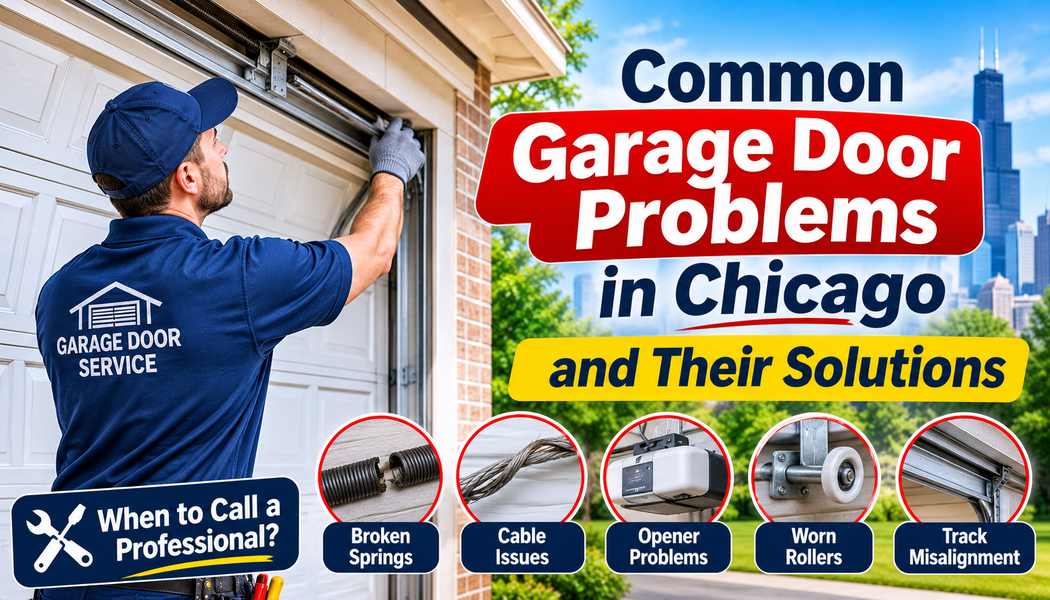
A garage door is a complex mechanical system with several components working together. Springs support its weight, cables help lift it, rollers guide its movement, and the opener controls automatic operation. When one component stops working correctly, it can affect the performance of the entire system.
For Chicago homeowners, maintaining a garage door can be particularly challenging. Freezing winters, moisture, temperature changes, and frequent daily use can contribute to mechanical wear and unexpected failures.
Understanding how these systems work can help you identify the cause of a problem and decide what needs professional attention. In this guide, we’ll cover common garage door problems in Chicago, why they happen, possible solutions, and when professional repair is necessary.
1. Garage Door Spring Problems
Garage door springs counterbalance the weight of the door, making it easier for the opener to lift and lower it. Without properly functioning springs, the opener may struggle to move the door.
Residential garage doors generally use two types of springs:
- Torsion springs: Installed horizontally above the garage door. They use rotational force to support the door’s weight.
- Extension springs: Installed along the horizontal tracks. They stretch and contract during the opening and closing process.
Both types experience repeated stress during normal operation. Over time, metal fatigue can reduce their effectiveness and eventually cause them to break.
Why do garage door springs fail?
Common causes include:
- Frequent daily operation.
- Natural wear and metal fatigue.
- Corrosion caused by moisture.
- Incorrect spring installation.
- Springs that are not properly matched to the door’s weight.
What is the solution?
A damaged spring generally needs professional replacement. A technician should inspect the complete spring system, select appropriately rated replacement components, and check the door’s balance after installation.
Never attempt to adjust or replace garage door springs yourself. They store significant mechanical energy and can cause serious injuries if handled incorrectly.
2. Garage Door Opener Malfunctions
An automatic garage door opener controls the movement of your door. Depending on the system, it may use a chain, belt, screw drive, or direct-drive mechanism.
When the opener develops a problem, the door may stop responding to remote controls or fail to complete its normal operating cycle.
Common causes of opener malfunctions include:
- Worn internal gears.
- Damaged electrical wiring.
- Faulty circuit boards.
- Motor failure.
- Remote control problems.
- Incorrect opener settings.
- Power supply interruptions.
How can you troubleshoot an opener?
Before arranging a repair appointment, try these basic checks:
- Confirm that the opener receives electrical power.
- Replace the remote control batteries.
- Check whether the wall control or vacation lock is activated.
- Make sure the emergency release has not disconnected the opener from the door.
- Consult the manufacturer’s instructions for any displayed error codes.
If the motor runs but the door does not move, the drive mechanism or connection system may need attention.
A professional technician can test the electrical components, inspect the drive system, and determine whether repairing the existing opener or replacing it is more practical.
3. Garage Door Cable Damage
Garage door cables work with the spring system to support and lift the door. They transfer force through the lifting mechanism and help maintain controlled movement.
Cables are usually made from strong metal strands, but repeated stress and environmental exposure can eventually cause deterioration.
What causes garage door cables to wear out?
- Corrosion from moisture.
- Friction against other components.
- Improper cable tension.
- Worn cable drums.
- Poor installation.
- Repeated operation over time.
A cable problem can affect the door’s balance and place additional stress on the remaining lifting components.
How is cable damage repaired?
The technician first examines the cables, drums, springs, and related hardware. Damaged cables are replaced with compatible components, followed by adjustments and safety testing.
If you suspect cable damage, stop operating the garage door. Do not attempt to reconnect loose cables or adjust the lifting mechanism.
4. Misaligned or Bent Garage Door Tracks
Garage door tracks guide the rollers and keep the door moving along the correct path. They must remain properly aligned to support smooth and controlled operation.
Track problems can develop because of accidental impacts, loose mounting brackets, worn hardware, or structural changes.
Common reasons for track misalignment include:
- A vehicle accidentally hitting the track.
- Loose mounting bolts or brackets.
- Damaged rollers.
- Poor initial installation.
- Repeated mechanical stress.
- Corrosion or deterioration.
How are garage door tracks repaired?
The appropriate repair depends on the amount of damage.
Minor alignment problems may be corrected through professional adjustments. Bent or severely damaged tracks may require replacement.
A technician should also inspect the rollers and mounting hardware because replacing or adjusting a track without addressing the underlying cause may lead to recurring problems.
Avoid bending tracks back into position yourself. Incorrect adjustments can affect the stability of the entire door.
5. Worn-Out Garage Door Rollers
Rollers allow a garage door to travel along its tracks. They are attached to the door sections and help reduce friction during operation.
Most rollers contain a wheel that rotates as the door moves. Depending on their design, they may use steel, nylon, or other materials.
Over time, rollers can wear down, develop flat spots, or experience bearing failure.
What causes roller deterioration?
- Frequent opening and closing.
- Poor lubrication.
- Dirt and debris accumulation.
- Moisture exposure.
- Age and normal wear.
- Misaligned tracks.
What is the best solution?
Damaged rollers should be replaced with compatible components. During the repair, a technician should also inspect the tracks, hinges, and other moving parts.
Nylon rollers are often chosen for quieter operation, while steel rollers are commonly used in applications where their strength and design are appropriate.
The correct replacement depends on the door’s weight, track configuration, and manufacturer’s specifications.
6. Garage Door Safety Sensor Issues
Modern automatic garage doors use photo-eye sensors to detect objects in the doorway. These devices help prevent the door from closing when something interrupts the sensor beam.
Most systems have two sensors positioned near the bottom of the garage door opening.
If the sensors become dirty, misaligned, or damaged, the opener may prevent normal closing.
Common reasons for sensor problems include:
- Dust or dirt covering the lenses.
- Accidental movement of sensor brackets.
- Damaged electrical wiring.
- Faulty sensor components.
- Direct sunlight interfering with certain sensor designs.
How can you address sensor problems?
Start by cleaning both sensor lenses with a soft cloth. Check for visible obstructions and make sure the sensor brackets have not been knocked out of position.
If the indicator lights continue to show an error, the system may require professional testing or replacement.
Never bypass the safety sensors to force the door to close. These devices are an important part of the garage door’s safety system.
7. Garage Door Panel Damage
Garage door panels form the main structure of the door. They provide protection, contribute to insulation, and determine much of the door’s appearance.
Panels can become damaged through accidental impacts, moisture exposure, corrosion, or material deterioration.
Common types of panel damage include:
- Dents from vehicle impacts.
- Cracks in wooden or composite panels.
- Rust on metal surfaces.
- Warping caused by moisture.
- Damaged joints between sections.
Can an individual garage door panel be replaced?
In many cases, yes. If the damage is limited to one section and matching replacement panels are available, replacing that section may be more affordable than installing an entirely new door.
However, extensive damage can affect the structural integrity of the system. A technician should inspect the door before recommending a repair.
When comparing options, consider the door’s age, material, insulation, replacement-part availability, and overall condition.
8. Weatherstripping and Insulation Problems
Weatherstripping creates a seal around the garage door to help prevent outside air, moisture, dust, and insects from entering.
It is especially important for Chicago homeowners because freezing temperatures and winter precipitation can expose weaknesses in an aging garage door seal.
Common weatherstripping problems include:
- Cracked bottom seals.
- Hardened rubber materials.
- Missing sections of perimeter weatherstripping.
- Damaged side and top seals.
- Poor insulation between door sections.
How can you improve garage door insulation?
Start by inspecting the bottom seal and the weatherstripping around the frame. Replace damaged sections with compatible materials designed for your door.
If cold air continues entering after replacing the seals, the problem may involve damaged panels, poor alignment, or insufficient insulation.
For attached garages, improving insulation and sealing gaps can also help reduce unwanted temperature transfer into nearby living spaces.
9. Garage Door Balance Problems
A properly balanced garage door should remain controlled during operation. The spring system carries much of the door’s weight, allowing the opener to move it without excessive strain.
When the balance changes, the opener may work harder than intended.
Possible causes include:
- Incorrect spring tension.
- A worn or damaged spring.
- Improper spring installation.
- Changes in door weight.
- Problems with lifting cables.
An unbalanced door can damage the opener and other mechanical components.
Why is professional balancing important?
A technician can evaluate the spring system and determine whether the door has the correct counterbalance for its weight.
Do not disconnect the opener and attempt to lift a heavy door to test its balance unless you are following the manufacturer’s procedure and there are no signs of damage. A suspected spring or cable problem should be handled by a professional.
How Chicago Weather Affects Garage Door Systems
Chicago’s seasonal weather can contribute to garage door wear. Different components face different challenges throughout the year.
Winter: Freezing Temperatures
Cold weather can make existing mechanical issues more noticeable. Ice may also form around the bottom weather seal, preventing the door from moving freely.
Never force a frozen door open. Allow the ice to thaw safely and avoid damaging the rubber seal or door panels.
Spring: Moisture and Rain
Rain and moisture can contribute to corrosion, especially on exposed metal components. Check accessible hardware and weather seals for deterioration.
Summer: Heat and Humidity
Temperature and humidity changes can affect wooden garage doors and other moisture-sensitive materials. Regular inspections can help identify warping or changes in alignment.
Fall: Preparing for Winter
Fall is a useful time to inspect the garage door before freezing weather arrives. Remove accessible debris, check the weatherstripping, and arrange professional maintenance if the system has developed mechanical issues.
Seasonal maintenance helps identify developing problems before they become unexpected breakdowns.
Basic Garage Door Maintenance Homeowners Can Perform
Regular maintenance can help extend the working life of your garage door and reduce unnecessary wear.
Here are some basic tasks homeowners can perform safely:
1. Keep the sensor lenses clean
Dust and dirt can interfere with photo-eye sensors. Clean the lenses gently using a soft cloth.
2. Remove accessible debris
Keep the areas around the tracks and garage door opening free from leaves, dirt, and other loose debris.
3. Inspect weatherstripping
Check the bottom and perimeter seals for visible cracks, gaps, or deterioration.
4. Listen to the operating system
Pay attention to changes in noise during normal operation. Persistent grinding, scraping, or banging should be investigated.
5. Follow the manufacturer’s lubrication instructions
Use an appropriate garage door lubricant on components identified by the manufacturer. Avoid applying lubricant to tracks unless the manufacturer specifically recommends it.
6. Schedule professional inspections
Arrange an annual inspection to evaluate springs, cables, rollers, tracks, opener components, and safety systems.
Do not attempt spring adjustments, cable repairs, track realignment, or work involving the door’s high-tension components.
When Is Professional Garage Door Repair Necessary?
Some garage door problems require specialized tools, replacement parts, and technical knowledge.
Contact a professional when:
- Springs need adjustment or replacement.
- Lifting cables are damaged.
- Tracks are bent or severely misaligned.
- Rollers or supporting hardware require complex replacement.
- The opener has an electrical or motor failure.
- The garage door has structural damage.
- The safety system is not functioning correctly.
If the door is unstable, has come off its tracks, or has a broken spring, stop operating it and keep people away from the area.
Professional service is important because the garage door’s components work together. Repairing one part without checking related components may leave the original problem unresolved.
Garage Door Repair or Replacement: Which Option Is Better?
Not every garage door problem requires a complete replacement. In many situations, repairing the affected component is a more practical option.
| Situation | Recommended Option |
|---|---|
| Broken spring | Spring replacement |
| Damaged cable | Cable replacement |
| Faulty opener | Opener repair or replacement |
| Worn rollers | Roller replacement |
| Minor track alignment issue | Professional adjustment |
| Cracked weather seal | Weatherstripping replacement |
| Single damaged panel | Panel replacement, if compatible |
| Extensive structural damage | Consider full replacement |
| Repeated major failures | Compare repair and replacement costs |
Before deciding, consider the door’s age, condition, repair history, insulation performance, and the availability of replacement components.
A professional inspection can help you understand the long-term costs of both options.
How Much Does Garage Door Repair Cost in Chicago?
Garage door repair costs vary depending on the damaged component, the type of door, replacement-part requirements, and labor.
For example, replacing a worn roller is generally a different job from replacing a spring system or installing a new opener.
Several factors influence the final estimate:
- Type and extent of damage.
- Door size and construction.
- Replacement-part quality.
- Labor and repair complexity.
- Emergency or after-hours service.
- Warranty coverage.
Ask the repair company for a written estimate that explains the recommended work, parts, labor, and any additional charges.
It is also worth asking whether the repair includes testing the door’s balance and safety features.
How to Choose a Garage Door Repair Company in Chicago
Choosing the right service provider can help prevent recurring mechanical problems and unnecessary repair expenses.
Before hiring a company, consider these factors:
Experience: Look for technicians familiar with different garage door systems, openers, springs, and cable assemblies.
Transparent estimates: The company should explain the problem and provide pricing before beginning the work.
Availability: Ask whether same-day or emergency appointments are available when you need urgent assistance.
Replacement parts: Check whether the company uses compatible components suitable for your door.
Warranty coverage: Ask about warranties on replacement parts and completed work.
Safety testing: Make sure the technician checks the system after the repair.
A reliable service provider should explain the available solutions and help you make an informed decision.
Professional Garage Door Services in Chicago
When a garage door develops a mechanical problem, choosing an experienced local company can make the repair process easier.
Magic Touch Garage Doors provides residential and commercial garage door services in Chicago. The company handles common issues involving springs, cables, openers, rollers, tracks, and garage door installation.
Homeowners can benefit from:
- 24/7 emergency availability.
- Same-day appointments.
- Free estimates.
- Licensed technicians.
- Warranty coverage on applicable work.
Whether you need help with a damaged lifting system, a faulty opener, or another mechanical issue, the first step is identifying the actual cause.
You can explore the company’s professional garage door repair services to learn more about available solutions.
For appointments or repair inquiries, call +1 312-804-2634
Final Thoughts
Garage door systems rely on several mechanical and electrical components working together. Problems with springs, cables, openers, rollers, tracks, and sensors can affect the entire system if they are not addressed properly.
For Chicago homeowners, seasonal weather adds another reason to pay attention to regular maintenance. Inspecting accessible components, keeping sensor areas clean, and arranging professional inspections can help reduce unexpected problems.
When a repair involves high-tension springs, damaged cables, electrical components, or structural issues, professional assistance is the safest approach.
If your garage door needs attention, contact Magic Touch Garage Doors at +1 312-804-2634 to discuss your repair requirements and request a free estimate.