

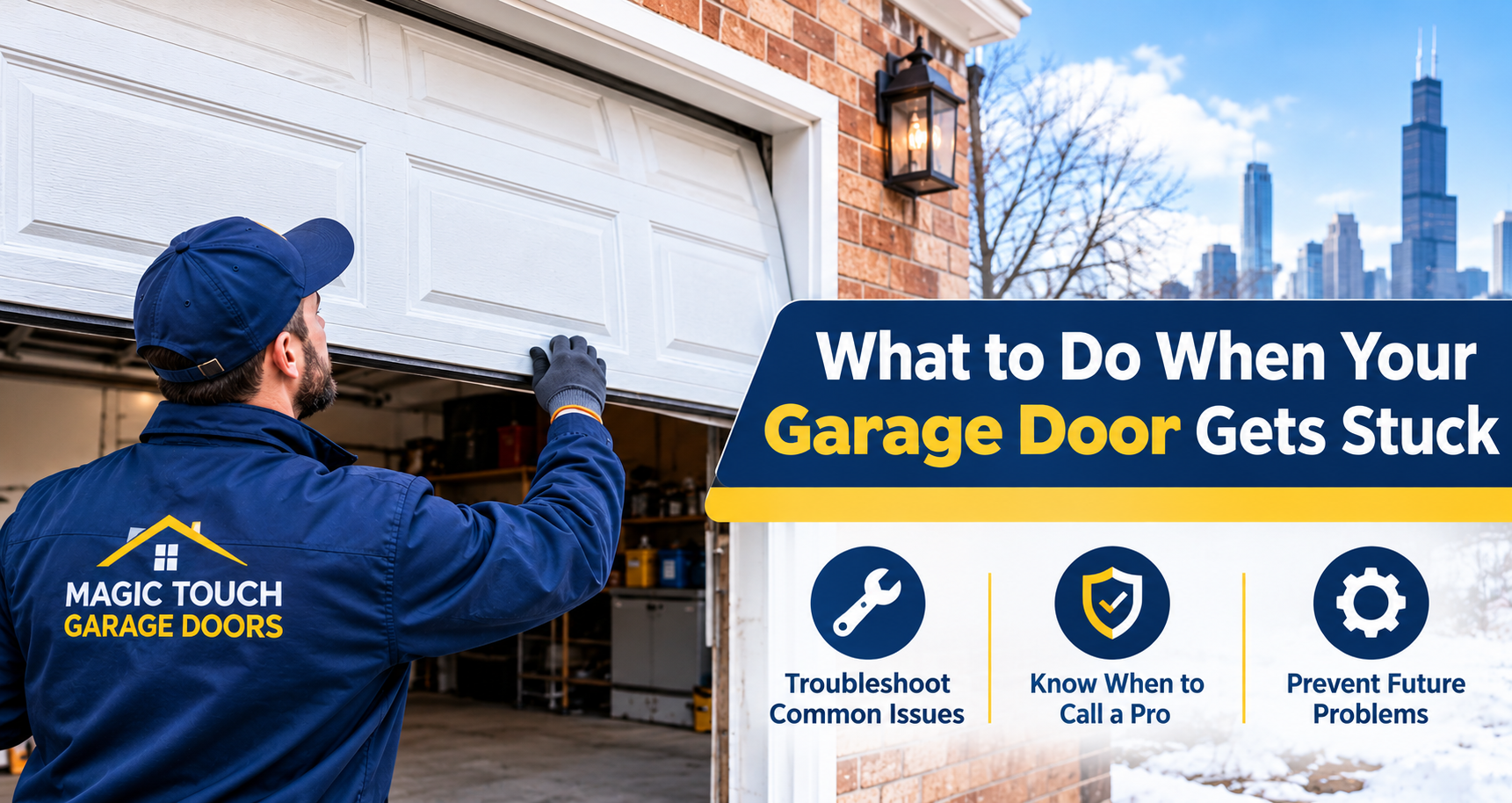
A stuck garage door can disrupt your daily routine. You may be unable to get your vehicle out, secure your property, or close the garage before leaving home. The problem can happen unexpectedly, especially when a spring breaks, a cable becomes damaged, or freezing temperatures affect the door.
Before trying to force it open, take a moment to identify the possible cause. Some issues can be resolved with basic troubleshooting, while others require professional attention to prevent further damage or injury.
If your garage door is stuck in Chicago, this guide explains what to check, which problems require professional repairs, and how to prevent similar issues in the future.
Why Does a Garage Door Get Stuck?
A garage door relies on several connected components to operate correctly. These include springs, lifting cables, rollers, tracks, safety sensors, and the automatic opener.
When one component fails or becomes obstructed, the entire system may stop working.
Common reasons include:
- Broken or worn-out garage door springs
- Loose or snapped lifting cables
- Bent or misaligned tracks
- Dirty or obstructed safety sensors
- Malfunctioning garage door opener
- Frozen weather seals during winter
- Damaged rollers or debris in the tracks
- Electrical or remote control problems
Identifying the symptoms can help you determine whether a simple adjustment is possible or professional service is needed.
What Should You Do First When Your Garage Door Gets Stuck?
Before attempting any troubleshooting, make sure the door is safe to approach. A damaged garage door can move unexpectedly, particularly when its spring or cable system is compromised.
Follow these initial steps:
- Stop operating the opener: Avoid repeatedly pressing the remote or wall button.
- Clear the surrounding area: Keep children, pets, and vehicles away from the door.
- Inspect visible components: Look for loose cables, broken springs, bent tracks, or damaged rollers without touching them.
- Check for obstructions: Look for objects, debris, or ice blocking the door.
- Listen for unusual sounds: Grinding, scraping, or loud popping noises may indicate mechanical damage.
- Avoid forcing the door: Never push or pull a jammed door if it appears unstable.
If you notice a broken spring, hanging cable, or door that has moved off its tracks, stop troubleshooting and contact a qualified technician.
7 Common Reasons Your Garage Door Gets Stuck
Understanding the possible cause can help you decide what to check and when to arrange professional assistance.
1. Broken Garage Door Springs
Garage door springs counterbalance the weight of the door and help the opener lift it. When a spring breaks, the door may become too heavy to operate normally.
A broken torsion spring is generally located above the door, while extension springs are installed along the sides.
Common warning signs:
- A loud bang coming from the garage.
- The door suddenly refuses to open.
- The opener runs, but the door barely moves.
- The door feels unusually heavy.
- The door opens unevenly.
What should you do?
Stop using the garage door immediately. Never attempt to wind, adjust, or replace a spring yourself. These components operate under significant tension and can cause serious injuries.
A professional technician can inspect the spring system and determine the appropriate replacement.
2. Damaged or Snapped Garage Door Cables
Lifting cables work alongside the springs to support and control the door. When a cable becomes frayed, loose, or disconnected, the door may hang unevenly or become jammed.
Look for these signs:
- One side of the door hangs lower.
- A cable appears loose or disconnected.
- The door moves unevenly.
- The door stops during operation.
- Visible cable strands appear damaged.
Do not attempt to reconnect or tighten a cable. Operating the door with damaged lifting hardware can create additional safety risks. Professional inspection and replacement can restore proper operation.
3. Bent or Misaligned Garage Door Tracks
Tracks guide the rollers as the door moves. If they become bent, loose, or misaligned, the rollers may struggle to travel through them.
This can cause scraping sounds, uneven movement, or a door that stops halfway.
Common symptoms include:
- Grinding or scraping noises.
- Visible gaps between rollers and tracks.
- Bent metal sections.
- Rollers that appear outside the track.
- Jerky door movement.
You can remove loose debris from the visible track area if it is safe to do so. However, do not loosen brackets, bend metal sections, or force rollers back into position. Significant damage requires professional attention.
4. Garage Door Opener Malfunction
Sometimes the door itself is in good condition, but the automatic opener cannot operate it correctly.
Problems may involve the motor, internal gears, drive mechanism, electrical connection, or remote control.
Possible warning signs:
- The remote does not respond.
- The motor hums without moving the door.
- The opener runs, but the door remains stationary.
- The door starts moving and suddenly stops.
- The opener makes unusual noises.
Basic checks you can perform:
- Replace the remote control batteries.
- Test the wall-mounted control.
- Make sure the opener is plugged in.
- Check for a tripped circuit breaker.
- Look for visible obstructions.
If these checks do not solve the problem, have the opener inspected before continuing to operate it.
5. Blocked or Misaligned Safety Sensors
Automatic garage doors use photoelectric sensors to detect objects in their closing path. These sensors are usually positioned near the bottom of the tracks.
When dirt, objects, or misalignment interfere with the sensors, the door may refuse to close or reverse during operation.
Common signs include:
- The door starts closing but immediately reverses.
- A sensor indicator light blinks.
- Dirt or cobwebs cover the sensor lenses.
- Objects block the path between the sensors.
Try these steps:
- Remove objects blocking the sensors.
- Clean both lenses with a soft, dry cloth.
- Check whether the brackets appear loose.
- Make sure nothing interrupts the sensor beam.
If the problem continues, arrange a professional inspection. Never bypass the safety sensors to force the door to close.
6. Frozen Garage Door During Chicago Winters
Chicago’s freezing temperatures, snow, and freezing rain can affect garage door operation. Moisture around the bottom weather seal may freeze against the concrete floor, preventing the door from opening.
Signs of a frozen garage door include:
- The bottom seal appears attached to the floor.
- The opener runs, but the door does not lift.
- Ice is visible along the bottom edge.
- The door worked normally before temperatures dropped.
How to handle the problem:
- Stop operating the opener.
- Inspect the bottom seal for visible ice.
- Carefully remove loose snow and ice around the door.
- Use a hair dryer on a low or moderate setting to warm the frozen seal.
- Dry the area after the ice melts.
Avoid boiling water, open flames, or sharp metal tools. These can damage the weather seal and surrounding materials.
If the door remains stuck after the ice has melted, another mechanical problem may be responsible.
7. Damaged Rollers or Debris in the Tracks
Rollers allow the garage door to travel smoothly along its tracks. Over time, they can wear down, crack, or collect dirt that interferes with movement.
Small objects trapped in the tracks can also prevent normal operation.
Watch for these symptoms:
- Squeaking or grinding noises.
- Uneven or jerky movement.
- Visible dirt inside the tracks.
- Cracked or worn rollers.
- The door stops at the same point repeatedly.
Remove loose debris if it is safe to do so. Avoid removing rollers or adjusting their brackets. If the problem continues, a technician can inspect the roller system and replace damaged components.
How to Identify the Problem With Your Stuck Garage Door
The way your garage door behaves can provide useful clues about the underlying issue.
| Garage door symptom | Possible cause | Recommended action |
|---|---|---|
| Door will not open | Broken spring or opener issue | Professional inspection |
| Door stops halfway | Spring, roller, or track problem | Stop operating the door |
| Door hangs unevenly | Damaged cable or spring | Contact a technician |
| Door closes and reverses | Sensor obstruction or misalignment | Clean and check sensors |
| Opener runs but door stays still | Drive mechanism or mechanical failure | Arrange an inspection |
| Grinding sounds | Worn rollers or opener gears | Professional assessment |
| Door freezes to the floor | Ice around the bottom seal | Carefully thaw and dry |
These symptoms are starting points, not definitive diagnoses. A technician should inspect the system before recommending repairs.
Can You Open a Stuck Garage Door Manually?
Some garage doors can be operated manually using the emergency release cord attached to the automatic opener. However, this should only be considered when the door is fully closed, stable, and free from visible mechanical damage.
If the door is safe to operate manually:
- Make sure the door is completely closed.
- Check for visible signs of spring, cable, or track damage.
- Follow the manufacturer’s instructions for using the emergency release.
- Lift the door slowly using its designated handle.
- Stop if it feels unusually heavy or moves unevenly.
A properly balanced garage door should move smoothly without excessive effort.
Important: Never pull the emergency release when the door is open or partially open unless a qualified technician has instructed you to do so. A damaged spring system may cause the door to fall when disconnected from the opener.
If you are uncertain about its condition, leave the door alone and request professional assistance.
When Should You Call a Professional Garage Door Repair Technician?
Basic issues such as dead remote batteries or dirty safety sensors may be manageable for homeowners. However, problems involving springs, cables, tracks, and heavy door components require professional attention.
Contact a technician if:
- A spring has broken or the door suddenly feels extremely heavy.
- A lifting cable is loose, frayed, or disconnected.
- The door has moved outside its tracks.
- The opener makes unusual noises or fails to move the door.
- The door repeatedly stops or operates unevenly.
- The garage cannot close or secure properly.
Ignoring these problems can cause additional damage. For example, operating a door with a broken spring can place unnecessary strain on the opener.
If you need assistance, Magic Touch Garage Doors provides professional garage door repair services in Chicago, IL.
What to Expect During a Professional Garage Door Repair Visit
Understanding the repair process helps you know what to expect when scheduling service.
1. Initial Assessment
The technician will ask about the problem, including when it started, what noises you noticed, and whether the door is stuck open, closed, or halfway.
2. System Inspection
The technician will examine the springs, cables, rollers, tracks, opener, and safety sensors to identify the cause.
3. Repair Estimate
You should receive an explanation of the recommended work and its estimated cost before approving the repair.
4. Repair Work
After approval, the technician will complete the necessary repairs using suitable tools and replacement components.
5. Final Safety Testing
The door should be tested for smooth movement, proper balance, opener operation, and safety sensor functionality.
Magic Touch Garage Doors offers 24/7 emergency availability, free estimates, and same-day appointments subject to scheduling.
How to Prevent Your Garage Door From Getting Stuck Again
Regular maintenance helps identify worn components before they cause unexpected breakdowns.
Follow these practical maintenance tips:
1. Inspect the Door Regularly
Look for visible signs of wear, rust, damaged rollers, loose hardware, and deteriorating weather seals. Do not touch or adjust springs and cables.
2. Keep the Tracks Clean
Remove loose dirt, leaves, and debris from the visible track area. Avoid applying heavy grease inside the tracks.
3. Lubricate Moving Components
Use a garage-door-compatible lubricant on appropriate moving metal parts, such as hinges, rollers, and bearings. Follow the manufacturer’s recommendations.
4. Test the Safety Sensors
Clean the sensor lenses and check their alignment. Test the automatic reversal system according to the opener manufacturer’s instructions.
5. Replace Worn Weather Seals
Inspect the bottom seal for cracks, gaps, or deterioration. A properly maintained seal helps keep moisture, cold air, and debris outside the garage.
6. Pay Attention to Unusual Noises
Grinding, squeaking, popping, and rattling can indicate developing mechanical problems. Arrange an inspection if the door’s movement or sound changes.
7. Schedule Professional Maintenance
A technician can inspect spring wear, cable condition, door balance, and opener performance. Regular professional maintenance is particularly useful for frequently used garage doors.
Why Choose Magic Touch Garage Doors in Chicago?
Choosing a reliable local company is important when your garage door stops working. You need technicians who can identify the actual problem and recommend an appropriate solution.
Magic Touch Garage Doors provides residential and commercial garage door services in Chicago, IL.
Customers can benefit from:
- 24/7 Emergency Availability: Assistance for urgent garage door problems.
- Same-Day Appointments: Available depending on scheduling.
- Free Estimates: An estimate before approving repair work.
- Licensed Technicians: Professional assistance with garage door repairs and installations.
- Residential and Commercial Services: Solutions for different property types.
- Comprehensive Repair Options: Assistance with springs, cables, openers, tracks, and other garage door components.
Whether your door is stuck halfway, refusing to open, or making unusual noises, addressing the issue early can help prevent more extensive damage.
Frequently Asked Questions About Stuck Garage Doors
Why is my garage door stuck halfway?
A garage door may stop halfway because of a broken spring, damaged cable, worn roller, misaligned track, or opener malfunction. Stop operating it if it moves unevenly or makes unusual noises.
Why does my garage door opener run but the door does not move?
This may indicate a disconnected or damaged drive mechanism, broken spring, or another mechanical problem. Avoid repeatedly operating the opener until the cause is identified.
Can a broken garage door spring prevent the door from opening?
Yes. Springs counterbalance the door’s weight. When one breaks, the opener may no longer have enough lifting assistance to raise the door safely.
Is it safe to force a stuck garage door open?
No. Forcing it can damage the opener, bend the tracks, or cause the door to shift or fall. Have the system inspected if you suspect mechanical damage.
How do I know if my garage door is off track?
An off-track door may hang crooked, scrape against the frame, or have rollers outside the metal tracks. Stop operating it and keep people away until a technician inspects it.
Why does my garage door freeze during Chicago winters?
Moisture around the bottom weather seal can freeze against the concrete floor. Carefully thaw the seal and dry the area to prevent refreezing.
Get Professional Help for a Stuck Garage Door in Chicago
A stuck garage door can affect your daily routine, prevent access to your vehicle, and leave your property exposed to security risks.
Start by checking simple issues such as remote batteries, power supply, visible obstructions, and dirty safety sensors. However, do not attempt to repair broken springs, damaged cables, or off-track doors yourself.
If your garage door is still stuck or showing signs of mechanical damage, contact Magic Touch Garage Doors for professional assistance.
We provide residential and commercial garage door services throughout Chicago, with 24/7 emergency availability, free estimates, and same-day appointments subject to scheduling.
Call today at +1 312-804-2634 to discuss your garage door problem and arrange a service appointment.